Domestic replenishment
Agreed local stock and dispatch schedules can reduce inventory and production interruptions.
Process-ready formulations for controlled-rheology polypropylene, polymer crosslinking, elastomer or silicone curing and LDPE initiation.
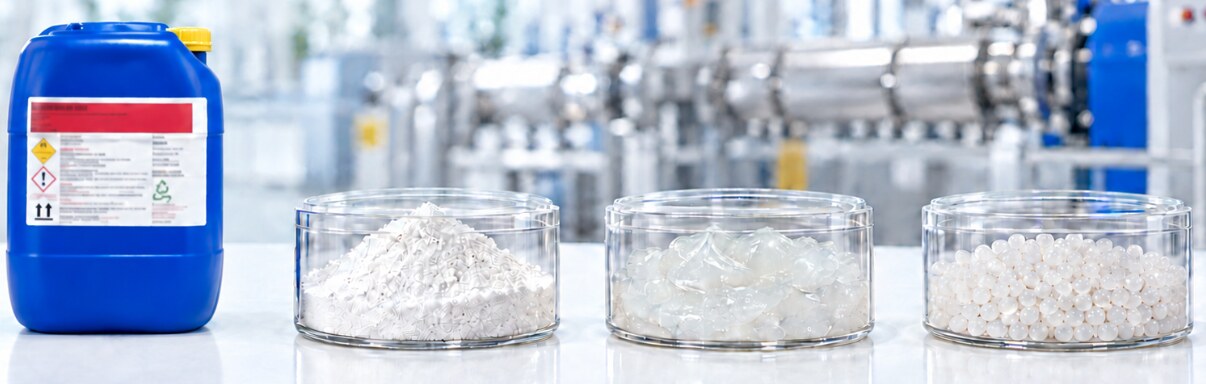
Four core peroxide series, supplied across liquid, powder, paste and masterbatch formats.
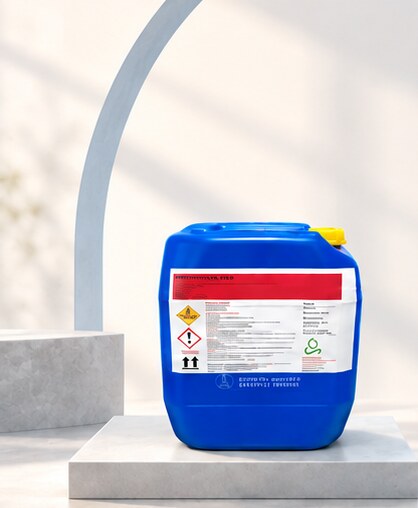
DHBP chemistry for PP melt-flow modification, polymer crosslinking and elastomer curing.
View the 101 Series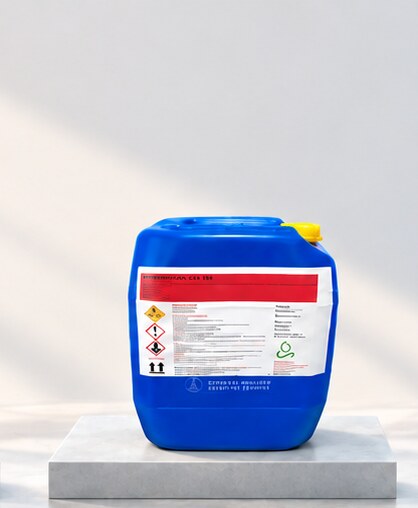
TETMTPA formulations for high-temperature controlled-rheology PP processing.
View the 301 Series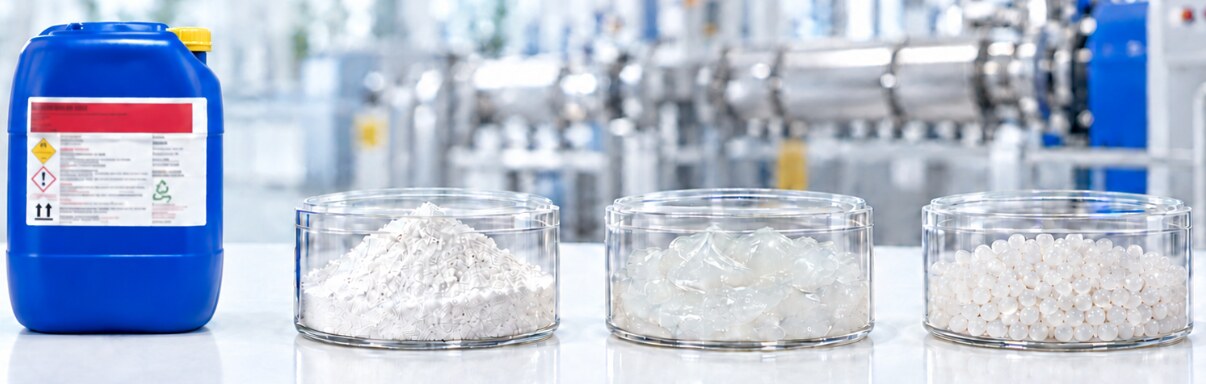
Di-tert-butyl peroxide for LDPE initiation, PE / EPDM crosslinking and PP flow modification.
View the DTBP Series
Dicumyl peroxide formulations for crosslinking rubber, silicone rubber and polyolefins.
View the BC SeriesAlso in the catalogue: Permanox-PD-50S-PS, Permanox-AX70, Permanox-301-PD and Permanox-301-PS.
All 21 Permanox products2,5-Dimethyl-2,5-di(tert-butylperoxy)hexane (DHBP)
| Grade | Formulation | Form | Typical application | Pack |
|---|---|---|---|---|
| Permanox-101 | ≥92% DHBP | Liquid concentrate | Modify PP melt flow; crosslink rubber and elastomers | 25 kg |
| Permanox-101-XL45 | 45% DHBP on silica and calcium carbonate | Powder | Crosslink natural and synthetic elastomers, including NR, EPDM, FKM and silicone | 10 kg |
| Permanox-101-XL45 PS | 45% DHBP in silicone oil | Paste | Crosslink silicone rubber | 20 kg |
| Permanox-101-XL45 SPS | 44–46% DHBP | Paste | Cure silicone rubber with extended scorch resistance | On request |
| Permanox-101-P20-MB | 20% DHBP on polymer beads | Masterbatch | Add peroxide uniformly in PP extrusion for reproducible melt-flow control | 15 kg |
| Permanox-101-P10-MB | 10% DHBP on polymer beads | Masterbatch | PP controlled rheology by visbreaking during extrusion | 15 kg |
| Permanox-101-P7.5-MB | 7.5% DHBP on polymer beads | Masterbatch | PP controlled rheology / visbreaking during extrusion | 50 kg |
3,6,9-Triethyl-3,6,9-trimethyl-1,4,7-triperoxonane (TETMTPA)
| Grade | Formulation | Form | Typical application | Pack |
|---|---|---|---|---|
| Permanox-301-IP | 42% TETMTPA in isoparaffinic solvent | Liquid | Controlled rheology in virgin and recycled polyolefins | 25 kg |
| Permanox-301-PTF | TETMTPA in isoparaffinic solvents; active oxygen 6.2–6.5% | Liquid | Controlled rheology of virgin and recycled PP; MFI reduction of recycled PE | 25 kg |
| Permanox-301-20P-MB | 20% TETMTPA in polymer matrix | Beads | Uniform PP visbreaking and melt-flow control during extrusion | 10 kg |
| Permanox-301-PD | TETMTPA powder on inert carrier; active oxygen 3.10–3.60% | Powder | PP rheology modification at 200–250 °C with controlled chain scission and MFI adjustment | 20 kg |
| Permanox-301-PS | TETMTPA paste; active oxygen 4.90–5.10% | Paste | PP flow modification at 200–250 °C with uniform dispersion and precise MFI control | 10 kg |
Di-tert-butyl peroxide (DTBP)
| Grade | Formulation | Form | Typical application | Pack |
|---|---|---|---|---|
| Permanox-P | 90% DTBP in isoparaffinic solvent | Liquid | LDPE polymerization initiator for tubular and autoclave processes | 25 kg |
| Permanox-DTBP-MB | DTBP on polymer beads; active oxygen 1.98–2.42% | Granules | PE / EPDM crosslinking and PP flow modification at 150–220 °C | 15 kg |
| Permanox-DTBP-PD | DTBP powder on inert carrier; active oxygen 4.87–5.00% | Powder | PP MFI modification and PE / elastomer crosslinking at 150–220 °C | 20 kg |
| Permanox-DTBP-PS | DTBP paste formulation; active oxygen 2.06–2.13% | Paste | PP visbreaking and PE / elastomer crosslinking at 150–220 °C | 20 kg |
Dicumyl peroxide (DCP)
| Grade | Formulation | Form | Typical application | Pack |
|---|---|---|---|---|
| Permanox-BC-PD40 | 40% dicumyl peroxide | Powder | Crosslink rubber and polyolefins | 20 kg |
| Permanox-BC-PS40 | 40% dicumyl peroxide | Paste | Crosslink silicone rubber with flexible mixing | 20 kg |
| Permanox-BC-EP40-MB | 40% dicumyl peroxide on inert polymer | Bead masterbatch | Bead-form crosslinking of rubber and polyolefins | 25 kg |
Domestic supply and application support can strengthen the value of established peroxide chemistries.
Agreed local stock and dispatch schedules can reduce inventory and production interruptions.
INR quotations with defined validity and delivery terms support more predictable costing.
Named application support helps customers optimise dosage, cure behaviour and target MFI.
Suitable packs, feeding formats and scheduled deliveries can improve plant handling and cash flow.
Approved SWC grades can reduce dependence on one supplier while meeting customer specifications.
Compare validated dosage, scrap and throughput to demonstrate the actual cost advantage.
Include these six inputs in a technical enquiry so the recommendation starts from your process.
Name the base polymer and its current grade, and whether the feed is virgin, recycled or a blend.
State the current and target MFI (or crosslink density) and the test method used.
Give the melt or cure temperature profile so the peroxide's half-life can be matched to the process.
Share line throughput and residence time at temperature so a starting dosage can be sized.
Note the peroxide and dosage used today, so a trial starts from a known reference point.
Say whether the plant doses liquid, powder, paste or masterbatch, and which pack size it handles best.
Share your requirements with our team for a technical or commercial discussion.